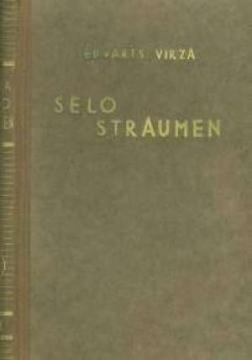
Selo Straumen: kronika lotiškog imanja
In the novel Straumen Village, Edvarts Virza depicts the idealized life of a Latvian village through the cycle of the seasons, emphasizing the collective, tradition, and harmony of man with nature.
Edvarts Virza in his work The Village of Straumen (1933) creates one of the most recognizable works of Latvian interwar literature, which can be understood as a poetic chronicle of idealized rural life.
For the reader unfamiliar with the Latvian literary tradition, it is important to emphasize that Straumēni does not function as a classic novel with a single protagonist and a clear plot line, but as a lyrical-epic depiction of a rural community. The work is often described as a rural epic, because the focus is not on the individual but on the collective – the family and the peasants living in harmony with natural cycles.
The plot is organized around the change of seasons, which determines the rhythm of life: spring brings the beginning of work and renewal, summer an intensive agricultural cycle, autumn the harvest and a sense of fulfillment, and winter a retreat into an enclosed, family space and reflection. This builds the idea of a stable, almost archetypal order in which man, land and tradition are interconnected.
In a broader cultural context, the work was created in a period when Latvian literature strongly affirmed national identity and rural values, often idealizing the village as a bearer of moral and cultural stability. Straumen Village is therefore read not only as a depiction of rural life, but also as a symbolic construction of national space and collective memory.
Stylistically, Virza uses highly stylized, rich and rhythmic language, close to poetry, which gives everyday village chores a monumental, almost mythical dimension. It is this combination of realism of details and idealization that makes the work one of the canonical texts of 20th-century Latvian literature.
Jedan primerak je u ponudi
- Traces of patina