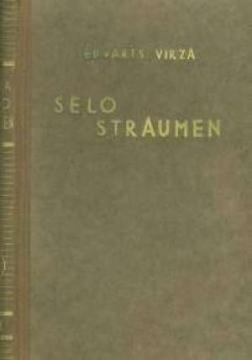
Selo Straumen: kronika lotiškog imanja
Antique

Selo Straumen: kronika lotiškog imanja

Edvarts Virza

In the novel Straumen Village, Edvarts Virza depicts the idealized life of a Latvian village through the cycle of the seasons, emphasizing the collective, tradition, and harmony of man with nature.

Edvarts Virza in his work The Village of Straumen (1933) creates one of the most recognizable works of Latvian interwar literature, which can be understood as a poetic chronicle of idealized rural life.

For the reader unfamiliar with the Latvian literary tradition, it is important to emphasize that Straumēni does not function as a classic novel with a single protagonist and a clear plot line, but as a lyrical-epic depiction of a rural community. The work is often described as a rural epic, because the focus is not on the individual but on the collective – the family and the peasants living in harmony with natural cycles.

The plot is organized around the change of seasons, which determines the rhythm of life: spring brings the beginning of work and renewal, summer an intensive agricultural cycle, autumn the harvest and a sense of fulfillment, and winter a retreat into an enclosed, family space and reflection. This builds the idea of ​​a stable, almost archetypal order in which man, land and tradition are interconnected.

In a broader cultural context, the work was created in a period when Latvian literature strongly affirmed national identity and rural values, often idealizing the village as a bearer of moral and cultural stability. Straumen Village is therefore read not only as a depiction of rural life, but also as a symbolic construction of national space and collective memory.

Stylistically, Virza uses highly stylized, rich and rhythmic language, close to poetry, which gives everyday village chores a monumental, almost mythical dimension. It is this combination of realism of details and idealization that makes the work one of the canonical texts of 20th-century Latvian literature.

Original title
Straumēni
Translation
Ivan Esih
Dimensions
18 x 13 cm
Pages
212
Publisher
Suvremena biblioteka, Zagreb, 1943.
 
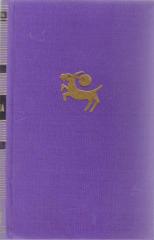
Latin alphabet. Hardcover.
Language: Croatian.

One copy is available

Condition:Used, very good condition
Damages or inconvenience notice:
  • Traces of patina
 

Are you interested in another book? You can search the offer using our search engine or browse books by category.

You may also be interested in these titles

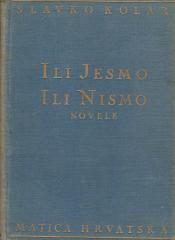
Ili jesmo ili nismo

Ili jesmo ili nismo

Slavko Kolar

Either We Are or We Are Not (1933) is Slavko Kolar's most famous collection of short stories. With a satirical and warm sense of humor, Kolar depicts the life of the Croatian village and the common man in interwar Yugoslavia – electoral fraud, bureaucracy

Matica hrvatska, 1933.
Croatian. Latin alphabet. Hardcover.
9.26 €
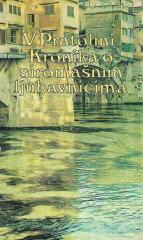
Kronika o siromašnim ljubavnicima

Kronika o siromašnim ljubavnicima

Vasco Pratolini

U Firenci 1925–1926, u siromašnoj via del Corno, stanari žive ljubavi, siromaštvo i strahove. Dolazak fašizma razara zajednicu: ljubavnici se bore, neki umiru od nasilja, ali narodna solidarnost opstaje.

Sveučilišna naklada Liber (SNL), 1982.
Croatian. Latin alphabet. Hardcover with dust jacket.
3.76 €
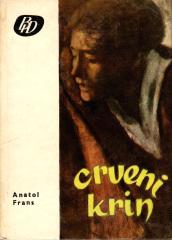
Crveni krin

Crveni krin

Anatole France

Crveni krin (1894.) nije samo priča o zabranjenoj strasti – to je suptilna, ironična freska jednog svijeta u kojem se ljubav, politika i umjetnost prepliću u tankoj, gotovo prozirnoj mreži konvencija i želja.

Svjetlost, 1961.
Serbian. Latin alphabet. Hardcover.
2.34 - 4.26 €
Automat

Automat

Alberto Moravia

Zbirka od 41 kratke priče: likovi djeluju kao "automati" – mehanički, bezvoljno, nesposobni za autentičnu reakciju na životne probleme. Moderni čovjek otuđen, zarobljen u rutini, seksu, novcu i pasivnosti, bez volje ili osjećaja.

Otokar Keršovani, 1966.
Croatian. Latin alphabet. Hardcover.
3.22 - 3.96 €
Pod starimi krovovi: Zapisci i ulomci iz plemenitaškoga svieta

Pod starimi krovovi: Zapisci i ulomci iz plemenitaškoga svieta

Ksaver Šandor Gjalski

Pod starimi krovovi (1886.) zbirka je pripovijesti Ksavera Šandora Gjalskog. Realistički i nostalgično prikazuje propadanje zagorskih plemićkih kurija, starih običaja i sukob generacija u doba raspada feudalnog društva.

Matica hrvatska, 1886.
Croatian. Latin alphabet. Hardcover.
17.24 €
Ravnodušni ljudi

Ravnodušni ljudi

Alberto Moravia

Roman prati propadajuću rimsku građansku obitelj Ardengo kroz nekoliko dana: udovica Mariagrazia, ljubavnik Leo, sin Michele i kći Carla – svi zarobljeni u apatiji, lažima, seksualnoj manipulaciji i moralnoj ravnodušnosti.

Otokar Keršovani, 1966.
Croatian. Latin alphabet. Hardcover.
3.22 €