Selo Straumen: kronika lotiškog imanja
Antiquität

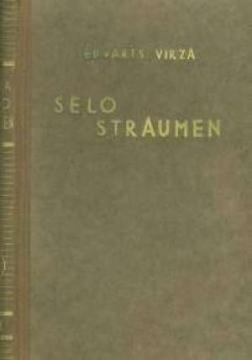
Selo Straumen: kronika lotiškog imanja

Edvarts Virza

In the novel Straumen Village, Edvarts Virza depicts the idealized life of a Latvian village through the cycle of the seasons, emphasizing the collective, tradition, and harmony of man with nature.

Edvarts Virza in his work The Village of Straumen (1933) creates one of the most recognizable works of Latvian interwar literature, which can be understood as a poetic chronicle of idealized rural life.

For the reader unfamiliar with the Latvian literary tradition, it is important to emphasize that Straumēni does not function as a classic novel with a single protagonist and a clear plot line, but as a lyrical-epic depiction of a rural community. The work is often described as a rural epic, because the focus is not on the individual but on the collective – the family and the peasants living in harmony with natural cycles.

The plot is organized around the change of seasons, which determines the rhythm of life: spring brings the beginning of work and renewal, summer an intensive agricultural cycle, autumn the harvest and a sense of fulfillment, and winter a retreat into an enclosed, family space and reflection. This builds the idea of ​​a stable, almost archetypal order in which man, land and tradition are interconnected.

In a broader cultural context, the work was created in a period when Latvian literature strongly affirmed national identity and rural values, often idealizing the village as a bearer of moral and cultural stability. Straumen Village is therefore read not only as a depiction of rural life, but also as a symbolic construction of national space and collective memory.

Stylistically, Virza uses highly stylized, rich and rhythmic language, close to poetry, which gives everyday village chores a monumental, almost mythical dimension. It is this combination of realism of details and idealization that makes the work one of the canonical texts of 20th-century Latvian literature.

Titel des Originals
Straumēni
Übersetzung
Ivan Esih
Maße
18 x 13 cm
Seitenzahl
212
Verlag
Suvremena biblioteka, Zagreb, 1943.
 
Latein Schrift. Hardcover.
Sprache: Kroatisch.

Angeboten wird ein Exemplar

Zustand:Gebraucht, in sehr gutem Zustand
Nachteile/Unannehmlichkeiten:
  • Traces of patina
Zum Warenkorb hinzugefügt!
 

Interessieren Sie sich für ein anderes Buch? Sie können das Angebot über unsere Suchmaschine suchen und finden oder Bücher nach Kategorien durchsuchen.

Diese Titel könnten Sie auch interessieren

Konformist

Konformist

Alberto Moravia

Marcello Clerici, obsessed with normality after a traumatic childhood and a homosexual attack, becomes a fascist bureaucrat. He marries the average Giulia, and on their "honeymoon" in Paris, he is assigned to kill a former professor, anti-fascist Quadri.

Otokar Keršovani, 1966.
Kroatisch. Latein Schrift. Taschenbuch.
4,96 €
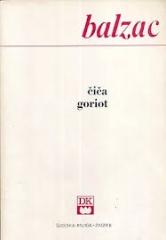
Čiča Goriot

Čiča Goriot

Honore de Balzac

Uncle Goriot is one of the most famous and important novels by Honoré de Balzac, published in 1835. It is part of his vast cycle The Human Comedy (La Comédie humaine), and is considered perhaps the most successful work in that cycle.

Školska knjiga, 1974.
Kroatisch. Latein Schrift. Taschenbuch.
3,26 €
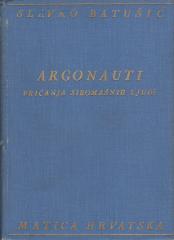
Argonauti: pričanja siromašnih ljudi

Argonauti: pričanja siromašnih ljudi

Slavko Batušić

The book shows the life of two poor friends, unemployed clerks Dominik Vrabec and Martin Mak, who wander in search of work and bread in the difficult interwar years, carrying the burden of misery, longing and a little man.

Matica hrvatska, 1936.
Kroatisch. Latein Schrift. Hardcover.
12,36 €
Za ljubav sina

Za ljubav sina

Herve Bazin

Intimna, autobiografski obojena drama o očinstvu, krivnji i složenim odnosima u obitelji. Glavni junak je Daniel, sredovječni udovac koji sam odgaja troje djece: blizance (starijeg sina i kćer) te najmlađeg sina Bruna.

Svjetlost, 1965.
Kroatisch. Latein Schrift. Taschenbuch.
2,76 €
Blizu kuće

Blizu kuće

Erskine Caldwell

„Blizu kuće“ (1962.) Erskinea Caldwella je oštar, realističan roman o rasizmu, hipokriziji i socijalnoj nepravdi na američkom Jugu u doba segregacije.

Svjetlost, 1964.
Kroatisch. Latein Schrift. Taschenbuch.
2,12 €
Žena koja je slikala kanom

Žena koja je slikala kanom

Alka Joshi

„Die Frau, die mit Henna malte“ ist der Debütroman der indisch-amerikanischen Autorin Alka Joshi und der erste Teil ihrer Jaipur-Trilogie. Der Roman wurde für seine authentische Darstellung der Kultur Rajasthans und das universelle Thema der weiblichen Em

Mozaik knjiga, 2021.
Kroatisch. Latein Schrift. Taschenbuch.
13,22 €