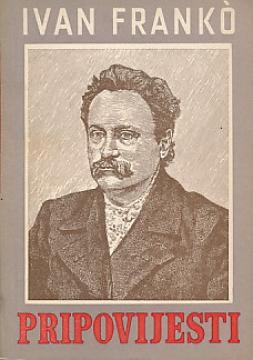
Pripovijesti

Pripovijesti

Ivan Franko

Contents: Bricklayer, Good earnings, Forests and pastures, Gypsies, On the light, Lady's bread, Note about the writer

Set in Galicia under Austrian rule in the late 19th century, the stories mock the poverty of peasants and workers, criticizing feudal exploitation, bureaucracy, and the loss of traditional rights. Franko, a doctor, journalist, and activist, calls for social justice and national awakening through realistic descriptions and profound characters.

  • The Bricklayer: Poor bricklayers, former peasants, come to the city looking for work, but encounter cruel employers and difficult conditions. The main character, an experienced craftsman, suffers from illness and exploitation, symbolizing the decline of the working class in urban chaos. The story ends tragically, emphasizing the helplessness of the common man.

  • Good Money: The peasant Mykyta goes to the city hoping for quick riches, but is deceived by speculators and landlords. Instead of making money, he ends up in debt and illness, returning to the village disappointed. Franko mocks the false promises of capitalism, showing how the poor remain victims.

  • Forests and Pastures: Old peasant Andriy Kritsky loses access to communal forests and pastures due to the enclosure of nobles and laws that favor large landowners. The story depicts the loss of natural resources and traditional life, leading to starvation and despair, criticizing the agrarian reform that protects the elite.

  • Gypsies: A Romani family arrives in the village, provoking prejudice and conflict with the local population. Through a story of love and betrayal within the Romani community, Franko explores the marginalization of minorities, the mixing of cultures, and racism, portraying the Gypsies as victims of social discrimination.

  • To the Light: A young intellectual or worker seeks the "light" of knowledge and truth in the darkness of ignorance and social injustice. He encounters bureaucracy and hypocrisy, but his journey symbolizes hope for enlightenment and the fight against the dark forces of feudalism.

  • Manorial Bread: A story of slave labor (panshchyna), where peasants work for "manorial bread" - a minimum payment from the nobles. Through characters suffering from hunger and humiliation, Franko denounces the feudal system, emphasizing that real bread comes only through free labor.

  • Author's Note: Franko's autobiographical essay about his work, his reflections on the role of literature in social struggle, and his inspiration from folk life.

Translation
Roman Šovary
Editor
Gustav Krklec
Dimensions
17 x 12 cm
Pages
105
Publisher
Zora, Zagreb, 1950.
 
Distribution: 5,000 copies
 
Latin alphabet. Paperback.
Language: Croatian.

Two copies are available

Copy number 1

Condition:Used, excellent condition

Copy number 2

Condition:Used, excellent condition
 

Are you interested in another book? You can search the offer using our search engine or browse books by category.

You may also be interested in these titles

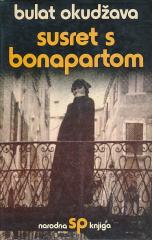
Susret s Bonapartom

Susret s Bonapartom

Bulat Okudžava

Bulat Okudžava often called his historical novel Meeting with Bonaparte his best work.

Narodna knjiga, 1988.
Serbian. Latin alphabet. Paperback with dust jacket.
7.465.60 €
Život jednoga umjetnika - Maksim Gorki

Život jednoga umjetnika - Maksim Gorki

Ilja Gruzdev

"The Life of an Artist", by Ilya Gruzdev, is a biographical work that deals with the life and work of Maxim Gorky, one of the most important Russian writers and social reformers.

Naklada Binoza, 1936.
Croatian. Latin alphabet. Paperback with dust jacket.
22.46 €
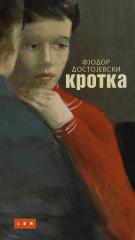
Pisma iz progonstva / Zimske beleške o letnjim utiscima / Krotka

Pisma iz progonstva / Zimske beleške o letnjim utiscima / Krotka

Fjodor Mihajlovič Dostojevski

Fyodor Dostoevsky, one of the greatest writers and visionaries in history, is presented in this edition with a selection from his correspondence (Letters from Exile), an account of his first trip to Europe (Winter Notes on Summer Impressions), and the fam

LOM, 2012.
Serbian. Cyrillic alphabet. Paperback.
6.74 €
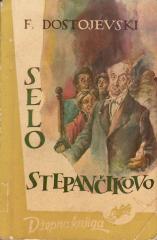
Selo Stepančikovo

Selo Stepančikovo

Fjodor Mihajlovič Dostojevski

"The Village of Stepanchikovo" is a humorous novel by Dostoyevsky, first published in 1859. This novel, which differs from the later, darker works of the author, is a satirical critique of social relations and human weaknesses.

Svjetlost, 1962.
Serbian. Latin alphabet. Paperback.
4.22 - 4.76 €
Džingis-kan

Džingis-kan

Vasilij Jan

Vasily Yan's novel Genghis Khan depicts the rise of the Mongol leader Temujin, from childhood in the steppes to the creation of the largest empire in the world, highlighting his courage, cruelty, and relentless will to power.

Rad, 1988.
Serbian. Latin alphabet. Hardcover.
9.78 €
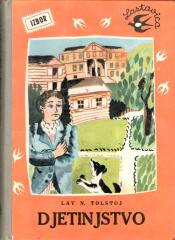
Djetinjstvo

Djetinjstvo

Lav Nikolajevič Tolstoj

Childhood (1852) is the first book of an autobiographical trilogy (with Adolescence and Youth), where Tolstoy explores the world of childhood through the eyes of a ten-year-old boy, Nikolinka Irtenjev – innocence, joys, sorrows and first traumas.

Svjetlost, 1971.
Croatian. Latin alphabet. Hardcover.
6.54 €