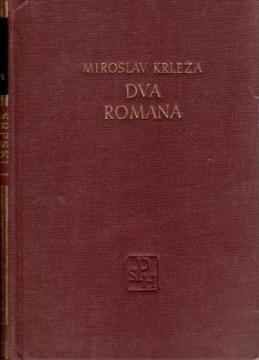
Dva romana: Povratak Filipa Latinovicza / Na rubu pameti

Dva romana: Povratak Filipa Latinovicza / Na rubu pameti

The book brings together two novels by Krleža featuring individuals in conflict with themselves and society: Filip searches for his identity and the meaning of art, while the protagonist of *On the Edge of Reason* sets himself apart from his milieu by reb

These two novels present two of Krleža’s key prose works: The Return of Philip Latinowicz and On the Edge of Reason. Although they differ in narrative technique and protagonists, both novels explore individual alienation, social hypocrisy, moral crisis, and the conflict between the individual and the environment to which they belong.

In The Return of Philip Latinowicz, the painter Filip returns to his native region after an absence of more than twenty years. This return stirs up memories of his childhood, his complex relationship with his mother Regina, and questions regarding his own origins. At the same time, he undergoes an artistic and existential crisis. In Kostanjevac, he meets various members of a decaying provincial world of the bourgeoisie and nobility; he is particularly drawn to Bobočka, a woman around whom passion, jealousy, and tragic relationships unfold.

On the Edge of Reason depicts the fate of an unnamed Zagreb intellectual who dares to publicly oppose the powerful and socially prominent general manager, Domaćinski. A single honest remark is enough to cause his hitherto orderly life to collapse. Society brands him a misfit and a danger; he loses his social standing and endures humiliation, a trial, and imprisonment.

In both novels, Krleža dissects bourgeois society, its conventions, moral compromises, and self-deception. Filip’s introspective quest for identity and artistic expression, alongside the open rebellion of the protagonist in On the Edge of Reason, represent two distinct forms of refusal to conform to a world defined by false authorities and social masks. Together, the novels present a powerful portrait of a solitary individual confronting their own doubts and the absurdities of the environment in which they live.

Urednik
Marijan Matković
Naslovnica
Čedomir Cvetković
Dimenzije
20 x 14 cm
Broj strana
430
Izdavač
Naprijed, Zagreb, 1966.
 
Latinica. Tvrde korice.
Jezik: Hrvatski.

Jedan primerak je u ponudi

Stanje:Korišćeno, u odličnom stanju
Dodato u korpu!
 

Zanima Vas i neka druga knjiga? Možete pretražiti našu ponudu pomoću pretrage ili prelistati knjige po kategorijama.

Možda će Vas zanimati i ovi naslovi

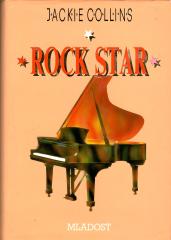
Rock Star

Rock Star

Jackie Collins

With the rhythm of rock'n'roll, Jackie Collins takes the reader behind the scenes of the world of fame and fortune, where three music stars — Kruger, Rafaella and Bobby — experience turbulent passions, betrayals and the struggle for success, while ambitio

Mladost, 1990.
Hrvatski. Latinica. Tvrde korice s omotom.
9,34 €
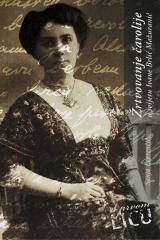
Žrtvovanje čarolije u svijetu Ivane Brlić Mažuranić

Žrtvovanje čarolije u svijetu Ivane Brlić Mažuranić

Sanja Lovrenčić

The essays collected in this book reveal the origins and meanders of Sanja Lovrenčić's years-long search for the authentic character of Ivana Brlić Mažuranić.

Mala zvona, 2024.
Hrvatski. Latinica. Broširano.
12,98 €
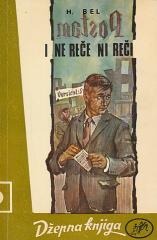
I ne reče ni reči

I ne reče ni reči

Heinrich Böll

In Boll's novels, one of the central themes is the attempt to preserve basic moral values ​​in a time of terror, as well as in a period of material prosperity and corruption.

Svjetlost, 1965.
Srpski. Latinica. Broširano.
3,22 - 3,98 €
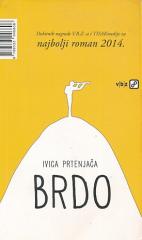
Brdo

Brdo

Ivica Prtenjača

It is a deeply disturbing text, full of emotions and traumatic experiences of a collapsed, imploded urban individual crying out for the meaning of life.

VBZ, 2014.
Hrvatski. Latinica. Broširano.
7,82 €
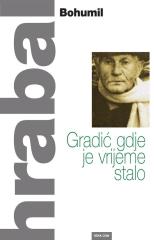
Gradić gdje je vrijeme stalo

Gradić gdje je vrijeme stalo

Bohumil Hrabal

Bohumil Hrabal, a Czech writer known for his lyrical grotesque and humor, in his novel The Town Where Time Stood Still evokes childhood in the small town of Libeň (part of Prague), where time seems to stand still in a magical but melancholic world.

Hena Com, 2006.
Hrvatski. Latinica. Broširano.
7,62 €
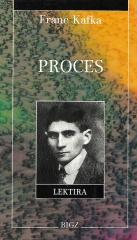
Proces

Proces

Franz Kafka

Kafka wrote The Process between 1914 and 1915, published posthumously in 1925. The novel is unfinished but with an added final chapter by Max Brod. Edition with a foreword by B. Živojinović and an afterword by Walter Killi.

BIGZ, 1990.
Srpski. Latinica. Broširano.
4,26 €