Kriza i ekonomska politika

Kriza i ekonomska politika

Dubravko Radošević

The works of the best Croatian economists in the field of politics and economics of economic development in Croatia were presented.

The global economic and financial crisis has caused a worldwide reexamination of the prevailing economic theory and has brought political economy back into the focus of research, as a science that combines economics and politics. The relevance of political economy is even greater in the so-called transition countries, which – in addition to the current crisis – must also deal with the problems of rapid growth of their national economies and convergence with the economies of the European Union. However, the main goal of transition and accelerated development is the construction of a new economic system and new social relations. As Slavoj Žižek said, neoliberalism as an economic theory died in the 21st century with the financial crisis of 2008. Unfortunately, these modern trends have not yet found their reflection in Croatia. Economic neoliberalism, which was accepted by all political elites in Croatia at the beginning of the process of building a market economy in the 1990s, is the cause of the failed transition, which we still feel today. The sources of the current crisis were set at that time. Deregulation and liberalization encouraged non-transparent and immoral privatization, and deepened the crisis in Croatia. Economic neoliberalism and inappropriate economic strategies applied by all Croatian governments and the Croatian National Bank are the cause of the 'delayed transition' and crisis in Croatia. From 2000 to 2010, the application of such a neoliberal social and economic model - based on consumption and excessive borrowing abroad - continued, which led to a structural crisis of Croatian society and economy, which was only deepened by the global crisis. Such developments did not come as a surprise to the part of economic science in Croatia. Certain economists predicted such developments in time.

Editor
Dubravko Radošević
Graphics design
Mario Ostojić
Dimensions
23 x 15 cm
Pages
276
Publisher
Jesenski i Turk, Zagreb, 2010.
 
Latin alphabet. Paperback.
Language: Croatian.

One copy is available

Condition:Used, excellent condition
 

Are you interested in another book? You can search the offer using our search engine or browse books by category.

You may also be interested in these titles

Osnove korporativnih financija

Osnove korporativnih financija

Alan Marcus, Richard Arthur Brealey, Stewart Clay Myers

The Fundamentals of Corporate Finance book explains the key financial concepts and tools needed to make business decisions, including capital management, investment appraisal, and risk analysis.

Mate d.o.o, 2007.
Croatian. Latin alphabet. Paperback.
27.36 €
Premještanje usluga

Premještanje usluga

Robert F. Kennedy, Ajay Sharma

Exploiting the optimal overseas opportunity.

Mate d.o.o, 2009.
Croatian. Latin alphabet. Hardcover with dust jacket.
7.82 €
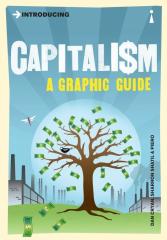
Introducing Capitalism: A Graphic Guide

Introducing Capitalism: A Graphic Guide

Dan Cryan, Sharron Shatil

An accessible, illustrated introduction to capitalism - its history, key ideas and impact on the world. Ideal for beginners and anyone who wants to quickly understand how capitalism shapes the economy, politics and values ​​of the modern world.

Icon Books, 2013.
English. Latin alphabet. Paperback.
6.32 €
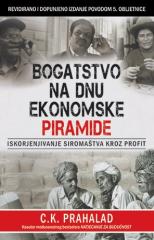
Bogatstvo na dnu ekonomske piramide

Bogatstvo na dnu ekonomske piramide

C. K. Prahalad

Revised and updated 5th anniversary edition. Eradication of poverty through profit.

Mate d.o.o, 2010.
Croatian. Latin alphabet. Hardcover.
9.28 €
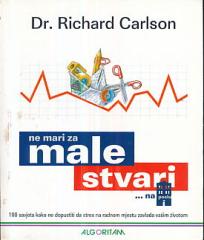
Ne mari za male stvari… na poslu

Ne mari za male stvari… na poslu

Richard Carlson

The third book in the series, Don't Care About Small Things at Work, continues the successful series and offers a hundred new tips on how to reduce the level of stress, this time, related to the workplace.

Algoritam, 2001.
Croatian. Latin alphabet. Paperback.
3.98 €
Kraj siromaštva: Ekonomske mogućnosti našeg doba

Kraj siromaštva: Ekonomske mogućnosti našeg doba

Jeffrey Sachs

In the book, economist Jeffrey Sachs presents an optimistic plan for eliminating extreme poverty by 2025. He argues that this is feasible with political will, because world wealth is growing, and poverty is not fate, but the result of inefficient systems.

Algoritam, 2007.
Croatian. Latin alphabet. Paperback.
9.78 €