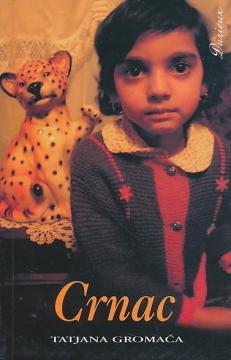
Crnac

Crnac

Tatjana Gromača

The novel The Black Man begins with the sentence “The house we lived in was wooden.” Wooden houses are reserved for fairy tales and stories for children.

The author does indeed write about childhood, a childhood that could be hers, but the narrator has no name, nor does the village she lives in, nor the city she goes to study in. The novel is composed of short fragments that sometimes read as short stories, sometimes as flashes of memory, and sometimes as prose poems. There are no elements of a fairy tale in the narrator's childhood, quite the opposite. In the suburbs of a provincial town known for its heavy industry, the child grows up surrounded by poverty, provincialism, and the subtle terror of people living empty lives. Going to study in a big city doesn't change anything either. The streets are bigger, a little better lit, but people with "empty gazes" still follow her. Gromača writes about the same Eastern European poverty described by Slavenka Drakulić, the same attitude towards women that Dubravka Ugrešić wrote about, but her prose fragments are closer to Danilo Kiš's novel The Garden, Ashes, Milan Kundera's The Joke, Agota Kristof's The Great Notebook, and Szymborska's poetry. Tatjana, like all good poets, knows how to say a lot with few words.

Editor
Nenad Popović
Dimensions
20 x 13 cm
Pages
159
Publisher
Durieux, Zagreb, 2004.
 
Latin alphabet. Paperback.
Language: Croatian.

One copy is available

Condition:Used, excellent condition
 

Are you interested in another book? You can search the offer using our search engine or browse books by category.

You may also be interested in these titles

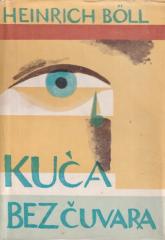
Kuća bez čuvara

Kuća bez čuvara

Heinrich Böll

The novel depicts the post-war period in Germany, and Böll, using the strange technique of painting the world from below through the mute mouth of a boy reporter, presents images of the spiritual and material rescue of the female protagonists of fatherles

Zora, 1957.
Croatian. Latin alphabet. Hardcover with dust jacket.
4.00 €
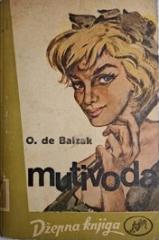
Mutivoda

Mutivoda

Honore de Balzac

Mutivoda is a novel from Balzac's great cycle "The Human Comedy" (La Comédie humaine). The action takes place in the small provincial town of Arcis-sur-Aube, where the election for a parliamentary representative is triggered by the arrival of a mysterious

Svjetlost, 1960.
Croatian. Latin alphabet. Paperback.
3.00 €
Urota

Urota

Paul Nizan

The novel follows a group of Parisian students who are dissatisfied with the society they live in and want to change it.

Kultura, 1956.
Croatian. Latin alphabet. Paperback with dust jacket.
8.005.60 €
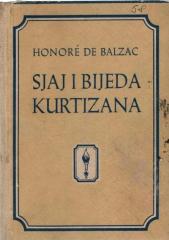
Sjaj i bijeda kurtizana

Sjaj i bijeda kurtizana

Honore de Balzac

The Splendor and Misery of a Courtesan is part of Balzac's collection The Human Comedy. The novel follows the fate of Lucien de Rubempré, an ambitious young poet, and his relationship with the mysterious Vautrin, an ex-convict, in the world of Parisian de

Kultura, 1952.
Croatian. Latin alphabet. Hardcover.
4.49 €
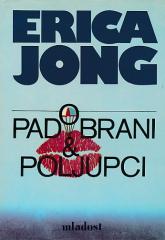
Padobrani i poljupci

Padobrani i poljupci

Erica Jong

This novel can be read as the third part of a cycle about Isadora Wing, a free-spirited writer who never hides her extraordinary penchant for sex.

Mladost, 1986.
Croatian. Latin alphabet. Hardcover with dust jacket.
7.00 €
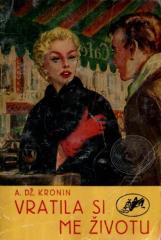
Vratila si me životu

Vratila si me životu

Archibald Joseph Cronin

The novel follows a young doctor, Robert Shannon, who, struggling with illness, professional failures, and inner doubts, finds new meaning and strength thanks to the love and understanding of a young woman.

Džepna knjiga, 1954.
Serbian. Latin alphabet. Paperback.
3.42 €