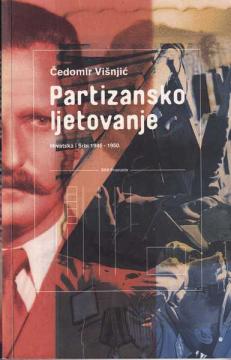
Partizansko ljetovanje: Hrvatska i Srbi 1945-1950.
Rare book

Partizansko ljetovanje: Hrvatska i Srbi 1945-1950.

Čedomir Višnjić

Čedomir Višnjić’s book explores the position and fate of Serbs in Croatia in the immediate aftermath of World War II, analyzing political, social, and cultural conditions during the period from 1945 to 1950.

This work by the distinguished historian Čedomir Višnjić is a thorough and multi-layered study dedicated to one of the most sensitive periods in modern Croatian and Serbian history. Focusing on the pivotal years between 1945 and 1950, the author analyzes how the end of World War II, the establishment of the new communist regime, and the subsequent postwar reconstruction and ideological upheavals impacted the lives of Serbs in Croatia.

The title symbolically points to the contradictory nature of the era—caught between revolutionary zeal, the euphoria of victory, and the construction of a new system on the one hand, and deep trauma, wartime devastation, insecurity, and forced social changes on the other. Višnjić draws upon a wide range of archival documents, press reports, and interwar and postwar materials to shed light on the processes of integration as well as the challenges the Serb community faced in the new federal state, including issues of national identity, agrarian reform, cultural life, and political control.

The book offers a much-needed analytical departure from oversimplified interpretations and serves as essential reading for understanding the complex inter-ethnic relations and political dynamics in Croatia in the immediate aftermath of 1945.

Dimensions
22 x 14 cm
Pages
487
Publisher
SKD Prosvjeta, Zagreb
 
Latin alphabet. Paperback.
Language: Croatian.

No copies available

The last copy was sold recently.
 

Are you interested in another book? You can search the offer using our search engine or browse books by category.

You may also be interested in these titles

Vreme sporta i razonode: Titina Hrvatska i njeni Srbi, 1951.-1971.

Vreme sporta i razonode: Titina Hrvatska i njeni Srbi, 1951.-1971.

Čedomir Višnjić

Čedomir Višnjić’s book analyzes the position of Serbs in Croatia (1951–1971) through the lens of everyday life, culture, and the media, and examines the Serbian community's reactions to the Croatian Spring.

SKD Prosvjeta, 2017.
Croatian. Latin alphabet. Paperback.
32.46 €
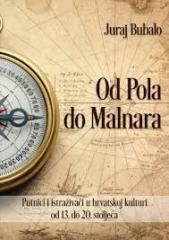
Od Pola do Malnara: Putnici i istraživači u hrvatskoj kulturi od 13. do 20. stoljeća

Od Pola do Malnara: Putnici i istraživači u hrvatskoj kulturi od 13. do 20. stoljeća

Juraj Bubalo

The book by Zagreb travel writer and professor Juraj Bubalo is a kind of encyclopedia of Croatian travelers and explorers. Unique in Croatian non-fiction, it popularizes the culture of exploration and reminds us that Croats have been part of global discov

Meridijani, 2024.
Croatian. Latin alphabet. Hardcover.
28.32 €
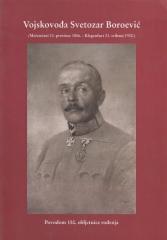
Vojskovođa Svetozar Boroević 1856-1920.

Vojskovođa Svetozar Boroević 1856-1920.

Milan Pojić

Svetozar Boroević, the most capable Austro-Hungarian military leader of the First World War, the only Croat who received the title of field marshal and was awarded the highest Austrian decorations, has been systematically hushed up in Croatian history.

Hrvatski državni arhiv, 2006.
Croatian. Latin alphabet. Paperback.
5.46 €
Gdje su naši najmiliji?

Gdje su naši najmiliji?

Udruženje Vukovarske majke, 1996.
Croatian. Latin alphabet. Hardcover.
17.9812.59 €
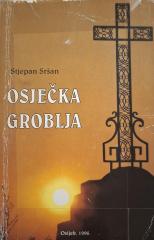
Osječka groblja

Osječka groblja

Stjepan Sršan

The book is deeply rooted in the local history and culture of Osijek, with an emphasis on cemetery motifs that serve as a metaphor for memory, death, and disappearance.

Povijesni arhiv u Osijeku, 1996.
Croatian. Latin alphabet. Paperback.
5.26 €
U osječkom nutarnjem gradu / In der inneren Stadt von Essek

U osječkom nutarnjem gradu / In der inneren Stadt von Essek

Helena Sablić Tomić
Hrvatska akademija znanosti i umjetnosti (HAZU), 2017.
Croatian. Latin alphabet. Hardcover.
37.46 €