Satir iliti divlji čovik

Satir iliti divlji čovik

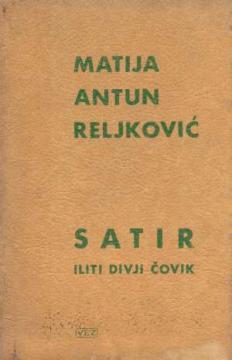
Matija Antun Reljković

The Enlightenment poem Satyr or the Wild Man by M. A. Reljković, through the dialogue between Satyr and Slavonian, sharply criticizes outdated customs and negligence and calls for education, work, and progress in Slavonia.

Satyr or the Wild Man (1st edition 1762, expanded in 1779) is the most important work of the Croatian Enlightenment, authored by the Slavonian writer and officer Matija Antun Reljković. Composed in the folk ten-line meter, this didactic-satirical poem was written with the clear intention of educating, instructing and economically uplifting the Slavonian peasantry after a century of Ottoman rule. The central part of the framework is the figure of Satyr – a mythical forest creature (“wild man”) – who observes Slavonia and, in a direct dialogue with a Slavonian peasant, offers a sharp criticism of the way of life of that time. Satyr does not spare the folk vices: superstition, drunkenness, idleness, neglect of agriculture, swearing and ignorance, labeling them the main culprits for the poverty and backwardness of the region. In contrast, Reljković glorifies the natural resources of Slavonia and offers specific Enlightenment advice on hygiene, rational economy, education and moral life. Although imbued with a Christian and moralistic spirit, the work had an extraordinary social and cultural impact. Satyr or Wild Man became extremely popular among contemporaries and remains a key testimony to the struggle for enlightenment and modernization of the Croatian countryside in the 18th century.

Editor
Ivo Bogner, Pavle Blažek
Graphics design
Predrag Gol
Dimensions
21 x 14 cm
Pages
159
Publisher
Glas Slavonije, Osijek, 1974.
 
Latin alphabet. Hardcover.
Language: Croatian.

Multiple copies are available

Copy number 1

Condition:Used, very good condition
Damages or inconvenience notice:
  • Slight damage to the cover

Copy number 2

Condition:Used, excellent condition

Copy number 3

Condition:Used, very good condition
Damages or inconvenience notice:
  • Worn covers
 

Are you interested in another book? You can search the offer using our search engine or browse books by category.

You may also be interested in these titles

Božanstvena komedija: Pakao

Božanstvena komedija: Pakao

Dante Alighieri

Inferno is the first part of Dante's Divine Comedy. In Inferno, he begins his journey with Virgil, who will guide him through all three states of the soul all the way to God himself. This is the second edition of Isa Kršnjavi's translation into Croatian.

Grafički, umjetnički i nakladni zavod Jugoslavija, 1919.
Croatian. Latin alphabet. Hardcover.
48.56 €
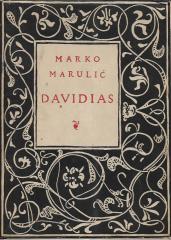
Davidias

Davidias

Marko Marulić
Jugoslavenska akademija znanosti i umjetnosti (JAZU), 1954.
Latin. Latin alphabet. Hardcover with dust jacket.
13.35 €
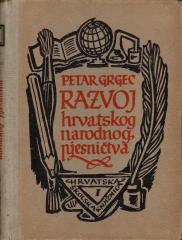
Razvoj hrvatskog narodnog pjesničtva: Književno-poviestne razprave

Razvoj hrvatskog narodnog pjesničtva: Književno-poviestne razprave

Petar Grgec

An overview of Croatian oral literature by Petar Grgec, who connects folk songs with history, language, and the formation of national consciousness, from medieval tradition to modern times.

Društvo hrvatskih srednjoškolskih profesora, 1944.
Croatian. Latin alphabet. Hardcover.
7.42 €
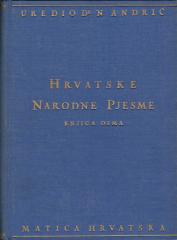
Hrvatske narodne pjesme – Knjiga osma: Junačke pjesme (odio prvi, sveska peta)

Hrvatske narodne pjesme – Knjiga osma: Junačke pjesme (odio prvi, sveska peta)

The eighth book in the series "Croatian Folk Songs" brings together Uskok and Hajduk folk songs edited by Dr. Nikola Andrić. The collection depicts battles, raids, revengeful exploits, and heroes of Croatian epic.

Matica hrvatska, 1939.
Croatian. Latin alphabet. Hardcover.
9.56 €
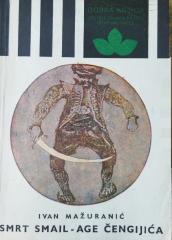
Smrt Smail -age Čengijića

Smrt Smail -age Čengijića

Ivan Mažuranić
Školska knjiga, 1982.
Croatian. Latin alphabet. Paperback.
1.46 €
Smrt Smail-age Čengijića

Smrt Smail-age Čengijića

Ivan Mažuranić
Školska knjiga, 1958.
Croatian. Latin alphabet. Paperback.
0.98 €