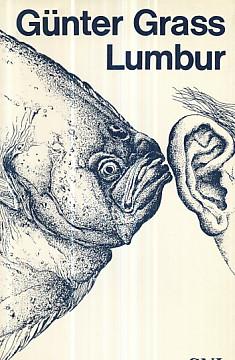
Lumbur

Lumbur

Günter Grass

Through the character of the wondrous *lumbur* fish and the narrator, this monumental and richly textured novel explores the history of human diet, gender relations, and socio-political changes from prehistory to the present day.

The magical-realist novel The Flounder (Der Butt) by Nobel laureate Günter Grass is one of the author’s most ambitious and complex literary achievements. The plot intertwines mythology, history, culinary arts, and the battle of the sexes across several millennia, spanning from the Stone Age to 20th-century Germany. The work’s central motif is inspired by the famous Brothers Grimm fairy tale about the fisherman and his wife, yet Grass radically transforms the story. At the heart of the narrative lies the flounder—a colossal, talking fish and a symbol of ancient male wisdom that, over the centuries, counsels men on how to dominate women. The story follows a timeless narrator and nine cooks (matriarchal figures representing various historical eras), thereby illustrating the evolution of human society through food, cooking, and matriarchy. In the modern era, a tribunal of women ultimately puts the captured flounder on trial for centuries of inciting patriarchal oppression. Through a lavish style rich in grotesque humor, satire, and philosophical reflection, Grass constructs a fascinating chronicle of human civilization that examines gender roles, ecology, politics, and the very act of artistic creation.

Original title
Der butt
Translation
Truda Stamać, Ante Stamać
Editor
Milan Mirić
Graphics design
Alfred Pal
Dimensions
21 x 13 cm
Pages
572
Publisher
Sveučilišna naklada Liber (SNL), Zagreb, 1979.
 
Latin alphabet. Hardcover with dust jacket.
Language: Croatian.

One copy is available

Condition:Used, excellent condition
 

Are you interested in another book? You can search the offer using our search engine or browse books by category.

You may also be interested in these titles

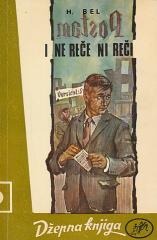
I ne reče ni reči

I ne reče ni reči

Heinrich Böll

In Boll's novels, one of the central themes is the attempt to preserve basic moral values ​​in a time of terror, as well as in a period of material prosperity and corruption.

Svjetlost, 1965.
Serbian. Latin alphabet. Paperback.
3.22 - 3.98 €
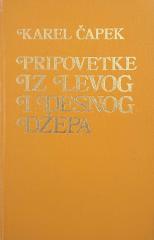
Pripovetke iz levog i desnog džepa

Pripovetke iz levog i desnog džepa

Karel Čapek

These stories deal with different topics, although most deal with different criminal acts, from fraud and fortune-telling to marriage fraud and murder.

Jugoslavijapublik, 1980.
Croatian. Latin alphabet. Hardcover.
5.22 €
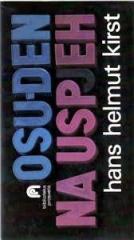
Osuđen na uspjeh

Osuđen na uspjeh

Hans Hellmut Kirst

In this work, the character of police inspector Keller appears for the first time, who fights crime with unusual methods.

Prosveta, 1987.
Croatian. Latin alphabet. Paperback.
4.98 €
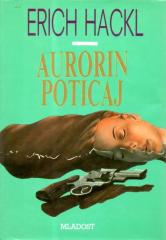
Aurorin poticaj

Aurorin poticaj

Erich Hackl

The work is based on a true event that occurred in Spain in 1933: Aurora Rodriguez killed her daughter Hildegart, a famous fighter for women's emancipation and a cult figure on the political scene of the time.

Mladost, 1990.
Croatian. Latin alphabet. Hardcover with dust jacket.
4.96 - 4.98 €
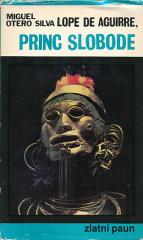
Lope de Aguirre - Princ slobode

Lope de Aguirre - Princ slobode

Miguel Otero Silva

Lope de Aguirre, Princ slobode je odraz postojanja american zajednice and stvaranja velike individualne figure koja u svijetu krvi i prijestupa poprima proporcije pjesničke alegorije.

Otokar Keršovani, 1983.
Croatian. Latin alphabet. Hardcover with dust jacket.
8.98 €
Proces

Proces

Franz Kafka

Kafka wrote The Process between 1914 and 1915, published posthumously in 1925. The novel is unfinished but with an added final chapter by Max Brod. Edition with a foreword by B. Živojinović and an afterword by Walter Killi.

BIGZ, 1990.
Serbian. Latin alphabet. Paperback.
4.26 €