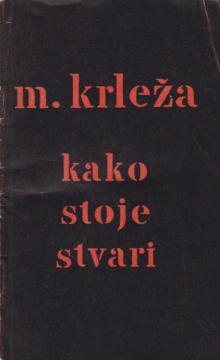
Kako stoje stvari: Predavanje održano u Domu JNA u Zagrebu 17. 12. 1952.
Retka knjiga

Kako stoje stvari: Predavanje održano u Domu JNA u Zagrebu 17. 12. 1952.

Miroslav Krleža

In his lecture How Things Are (1952), Krleža discusses the political and cultural situation of post-war Yugoslavia, emphasizing the need for critical thought, cultural renewal, and resistance to dogmatism.

“How Things Are” is a transcript of Krleža’s lecture given on December 17, 1952, at the Yugoslav People’s Army House – a speech set in a period of intense political and cultural turmoil following the breakup with the Informbiro. Krleža addresses the audience as a writer, intellectual, and participant in the times, with the intention of explaining what cultural and political work means in a country that is just trying to rebuild itself from the ruins of war and ideological fractures.

Krleža analyzes the state of society without pathos: he speaks of the necessity to break with dogmas, empty phrases, and bureaucratic automatisms that stifle the creative spirit. He emphasizes the importance of education, critical awareness, and cultural openness, contrasting them with the mentality of the “ideological shelf” and the routine that turns the revolution into a mere administrative mechanism. His rhetoric is forceful, but not propagandistic; he insists on the responsibility of intellectuals and the need for society to develop a culture of dialogue, not blind compliance.

The text, like most of Krleža's public speeches, is full of historical references, irony and broad cultural observations. The speech does not hide the tensions of the times: Krleža speaks about the dangers of introversion, the consequences of fanaticism and the meaning of "new delusions" that can appear where thought turns into dogma. At the same time, the text also carries a strong optimistic element - the belief that it is possible to build a society based on knowledge, creativity and freedom of ideas.

As things stand, therefore, it remains an important document of the times and a unique combination of political speech and essay: Krleža's view of the state of society from the perspective of a writer who does not accept simple truths and who believes that culture is the foundation of all true renewal.

Naslovnica
Mato Benković
Dimenzije
18,5 x 11,5 cm
Broj strana
41
Izdavač
Zora, Zagreb, 1953.
 
Latinica. Broširano.
Jezik: Hrvatski.

Jedan primerak je u ponudi

Stanje:Korišćeno, u odličnom stanju
Dodato u korpu!
 

Zanima Vas i neka druga knjiga? Možete pretražiti našu ponudu pomoću pretrage ili prelistati knjige po kategorijama.

Možda će Vas zanimati i ovi naslovi

Na rubu pameti

Na rubu pameti

Miroslav Krleža

Roman „Na ivici razuma“ (1938) je jedini Krležin roman napisan u prvom licu. Doktor prava moralno osuđuje moćnog industrijalca na banketu, time izazivajući opšti društveni bojkot, progon i sopstveni pad.

Jutarnji list, 2004.
Hrvatski. Latinica. Tvrde korice s omotom.
5,62 €
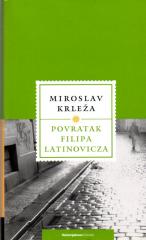
Povratak Filipa Latinovicza

Povratak Filipa Latinovicza

Miroslav Krleža

Povratak Filipa Latinovića jedan je od najpoznatijih romana Miroslava Krleže. Ovaj roman je značajan u našoj književnosti jer se smatra prvim potpuno modernim hrvatskim romanom.

Večernji list, 2004.
Hrvatski. Latinica. Tvrde korice s omotom.
5,52 - 5,56 €
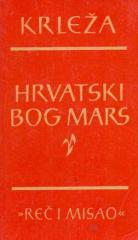
Hrvatski bog Mars

Hrvatski bog Mars

Miroslav Krleža

Der kroatische Gott Mars bringt sieben Antikriegsromane hervor, in denen Krleža den Krieg als eine grausame, sinnlose Maschinerie darstellt, die den „kleinen Mann“ zerstört, und die Heuchelei des Militarismus und der Mythen über Heldentum entlarvt.

Rad, 1965.
Srpski. Latinica. Broširano.
1,99 €
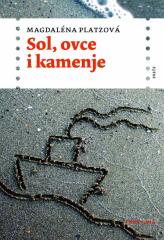
Sol, ovce i kamenje

Sol, ovce i kamenje

Magdaléna Platzová

Svjež, nesputan književni pogled na Dalmaciju. Četiri priče o Dalmaciji ispripovijedane u maniri najboljih stranica češke književnosti. Oživljavajući mirise soli i mora autorica piše životopisnu prozu punu boja i okusa.

Fraktura, 2006.
Hrvatski. Latinica. Broširano.
8,54 €
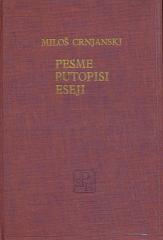
Pesme, putopisi, eseji

Pesme, putopisi, eseji

Miloš Crnjanski

Crnjanski koji piše pesme u uniformi ratnika, još uvek je gnevan borac što pljuje na zastave i psuje pod vešalima. Otrovni podanik kolone literata koji su, prezrevši rat, omrznuli život. Buntovnik će ubrzo pronaći svog dvojnika - mirnog čoveka sa Sumatre.

Naprijed, 1967.
Srpski. Latinica. Tvrde korice.
8,255,78 €
Fran Kurelac: tragom života i rada hrvatskoga preporoditelja i književnika (1811-1874)

Fran Kurelac: tragom života i rada hrvatskoga preporoditelja i književnika (1811-1874)

Mirko Breyer
Naklada Binoza, 1939.
Hrvatski. Latinica. Tvrde korice.
12,99 €