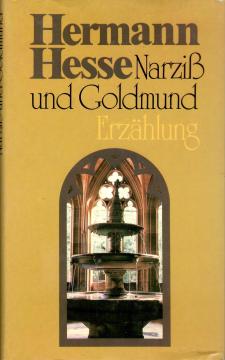
Narziß und Goldmund
In the novel Narcissus and Chrysostom, Hermann Hesse follows two friends: the ascetic monk Narcissus and the artistically restless Chrysostom, who search for the meaning of life through wanderings, love, and suffering.
Narcissus and Chrysostom is a novel by Hermann Hesse that explores the relationship between spirit and body, reason and emotion, asceticism and the passions of life. The plot begins in the medieval Mariabronn monastery, where two young men with completely different personalities meet. Narcissus is serious, thoughtful and devoted to the spiritual life. He believes in order, discipline, knowledge and service to God. Chrysostom, on the other hand, is sensitive, beautiful, instinctive and open to the world of the senses. Although his father sends him to a monastery to become a monk, Narcissus quickly recognizes that Chrysostom is not made for monastic life.
Their friendship becomes crucial for Chrysostom. Narcissus helps him realize that his true nature is not to be found in renunciation of the world, but in experience, love, art and contact with life. Chrysostom leaves the monastery** and sets off on a long journey. Along the way, he meets women, passion, beauty, death, illness and violence. His life becomes a series of powerful experiences, but also painful losses. Through encounters with people and through his own mistakes, he gradually matures and begins to understand the transience of everything earthly.
An important part of the novel is Chrysostom's discovery of his artistic calling. In a sculptor, he finds a teacher and realizes that he can shape what he has experienced. Art allows him to transform the experiences of love, motherhood, death, and longing into lasting forms. However, even art does not bring him complete peace. He remains torn between the desire for freedom and the need for meaning.
In the end, Chrysostom returns to Narcissus, now the abbot of the monastery. Their reunion shows that no path in life is complete in itself. Narcissus represents spirit, thought, and faith, and Chrysostom represents sensuality, creativity, and experience. The novel does not give a simple answer about which path is right, but rather depicts man as a being seeking a balance between opposing forces. Through the two of them, Hesse speaks about friendship, art, transience, and the need for everyone to find their own truth.
Jedan primerak je u ponudi