Boheme

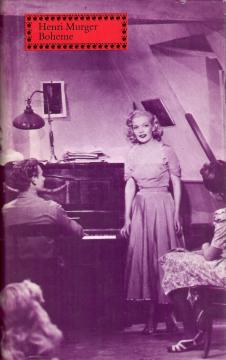
Boheme

Henri Murger

The novel depicts the lives of poor artists, writers, and musicians in Paris's Latin Quarter in the 1840s. A romantic, cheerful, and tragic portrayal of bohemian life full of love, poverty, and art.

Scènes de la vie de bohème (1845–1849, collected in a book in 1851) by Henri Murger is a classic work of French literature that popularized the term bohème (bohemia) and became the basis of the myth of the artistic life. Murger himself lived this life as a poor writer, so many episodes are autobiographical.

The book is composed of a series of scenes (scènes) that follow a group of young artists in the Latin Quarter of Paris: the poet Rodolphe (Murger's alter ego), the painter Marcel, the composer Schaunard, and the philosopher Colline. They live in extreme poverty, but with inexhaustible joy and creativity: moving at night to avoid rent, improvised dinners "on credit", romantic relationships, and artistic ambitions. Their lovers – Mimi (a seamstress), Musette, and others – are equally important: free, temperamental, and often tragic.

The central story is the love of Rodolphe and Mimi, which ends with Mimi's death from tuberculosis - a scene that has become iconic. Murger celebrates bohemia as resistance to bourgeois conformity: freedom, passion and creativity beyond the norms of money and career. At the same time, he realistically shows the dark side - hunger, disease, exploitation and the ruin of talents.

The work is a mixture of humor, sentimentality and social criticism. The style is lively, anecdotal, full of witty dialogues and lyrical descriptions of the Parisian underworld. Murger not only documented bohemia, but mythologized it - turned it into an ideal of free artistic life that has attracted generations.

The influence of the book is enormous: it inspired Puccini's opera La Bohème (1896), numerous films, theatrical adaptations and the cultural image of artists in attics. The novel is the foundation of modern bohemian mythology - from Parisian Montmartre to Greenwich Village.

Original title
Scènes de la vie de bohème
Translation
Felix Paul Greve
Dimensions
21 x 13 cm
Pages
348
Publisher
Deutscher Bücherbund, Stutgart / München, 1984.
 
Latin alphabet. Hardcover with dust jacket.
Language: German.

One copy is available

Condition:Unused
 

Are you interested in another book? You can search the offer using our search engine or browse books by category.

You may also be interested in these titles

Poslovi G-na Langoa

Poslovi G-na Langoa

Edgar Sanday, Edgar Faure

A novel by Edgar Faure (pseud. Edgar Sanday), a crime story with elements of social satire, set in a French provincial town. The atmosphere is imbued with tension and irony, and the language flows with ease, making the work attractive and intriguing.

Kosmos, 1959.
Croatian. Latin alphabet. Paperback.
2.50 - 3.52 €
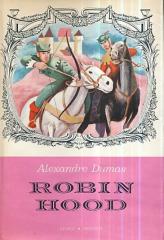
Robin Hood

Robin Hood

Alexandre Dumas

Dumas portrays Robin Hood not only as a bandit who helps the poor, but also as a heroic fighter for justice and a symbol of resistance to feudal injustice.

Epoha, 1966.
Croatian. Latin alphabet. Hardcover with dust jacket.
4.26 - 4.82 €
Prijatelj Armenac

Prijatelj Armenac

Andreï Makine
Disput, 2023.
Croatian. Latin alphabet. Paperback.
11.26 €
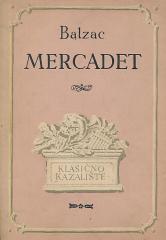
Mercadet

Mercadet

Honore de Balzac
Nakladni zavod Hrvatske, 1947.
Croatian. Latin alphabet. Paperback with dust jacket.
6.99 €
Madam Pompadur

Madam Pompadur

Jules de Goncourt, Edmond de Goncourt

Madame Pompadour (1878) by the Goncourt brothers follows the life of Jeanne-Antoinette Poisson, known as Madame de Pompadour (1721–1764), mistress of King Louis XV of France and one of the most influential women of the 18th century.

Epoha, 1966.
Serbian. Latin alphabet. Hardcover with dust jacket.
1.00 - 4.99 €
Evgenija Grande / Muzej starina

Evgenija Grande / Muzej starina

Honore de Balzac

In his novels Eugenie Grandet (1833) and The Museum of Antiquities (1837), Balzac explores universal themes of greed, human passions, sacrifice, and moral dilemmas, placing them in different social contexts of 19th-century French society.

Svjetlost, 1963.
Croatian. Latin alphabet. Hardcover.
3.42 - 3.48 €