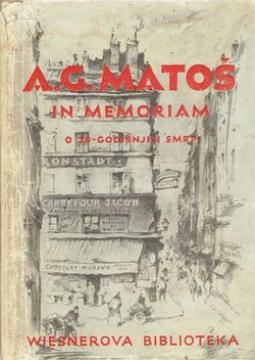
A. G. Matoš: In memoriam o 20-godišnjici pjesnikove smrti
Antique
Rare book

A. G. Matoš: In memoriam o 20-godišnjici pjesnikove smrti

Antun Barac, Milan Ogrizović, Boža S. Nikolajević, Zdenko Vernić, Tin Ujević, Antun Branko Šimić, Stanislav Šimić, Andre Rouveyre, Ljubo Wiesner, Nikola Polić, Velibor Gligorić, Karlo Häusler

Eine 1934 von Ljubo Wiesner herausgegebene Gedenksammlung (Wiesners Bibliothek, Bd. 1). Herausgeber und Autor war Antun Barac, mit Beiträgen von Milan Ogrizović, Tin Ujević, Ljubo Wiesner und anderen kroatischen Schriftstellern und Kritikern.

Der Sammelband erschien anlässlich des 20. Todestages von Antun Gustav Matoš (1914–1934) und stellt einen wichtigen Versuch dar, sein Werk in der Zwischenkriegszeit zu würdigen. Er enthält Analysen von Matoš’ Lyrik, Prosa, Essays und Kritiken, Erinnerungen an den Dichter sowie Einschätzungen seiner Bedeutung für die kroatische Literatur. Besonders hervorzuheben sind Barčs Beiträge, die Matoš als Modernisten, Ästheten und einen der einflussreichsten kroatischen Schriftsteller des frühen 20. Jahrhunderts würdigen.

Das Werk gehört zur Reihe Wiesner Library, die bedeutende literarische und kulturelle Publikationen zusammenfasst. Die Beiträge sind sachlich und literaturhistorisch geprägt und betonen Matoš’ Modernität, seinen europäischen Geist, seinen Patriotismus und seine ästhetischen Kriterien. Der Sammelband spiegelt das Bestreben wider, den zu Lebzeiten umstrittenen Matoš dauerhaft in den Kanon der kroatischen Literatur aufzunehmen.

Diese Ausgabe ist heute eine begehrte antiquarische Rarität, insbesondere gut erhaltene Exemplare mit Originaleinband. Sie besitzt einen hohen bibliografischen und Sammlerwert für Liebhaber von Matoš’ Werk sowie für Wissenschaftler der kroatischen Literaturkritik der Moderne und der Zwischenkriegszeit. Sie stellt ein wichtiges Dokument zur Rezeption von Matoš in den 1930er Jahren dar.

Editor
Antun Barac
Dimensions
20.5 x 14 cm
Pages
229
Publisher
Naklada Ljube Wiesnera i Roka Matulića, Zagreb, 1934.
 
Latin alphabet. Paperback with dust jacket.
Language: Croatian.

One copy is available

Condition:Used, very good condition
Damages or inconvenience notice:
  • Die Abdeckung fehlt
 

Are you interested in another book? You can search the offer using our search engine or browse books by category.

You may also be interested in these titles

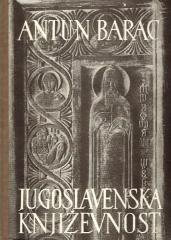
Jugoslavenska književnost

Jugoslavenska književnost

Antun Barac
Matica hrvatska, 1963.
Croatian. Latin alphabet. Hardcover.
4.99 €
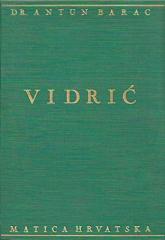
Vidrić

Vidrić

Antun Barac

"Vidrić" by Antun Barc is a monograph on the life and work of the poet Vladimir Vidrić. A classic study by one of the most important Croatian literary historians about a prominent representative of Croatian modernism.

Matica hrvatska, 1940.
Croatian. Latin alphabet. Hardcover.
7.56 - 9.32 €
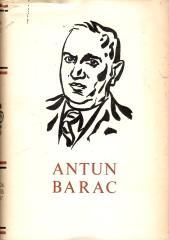
PSHK #101: Antun Barac: Članci i eseji

PSHK #101: Antun Barac: Članci i eseji

Antun Barac

Barac’s essays and articles provide an overview of Croatian literature, its writers, works, language, and development. He links literature with history, society, the European context, human experience, and art.

Matica hrvatska, 1968.
Croatian. Latin alphabet. Hardcover with dust jacket.
7.56 €
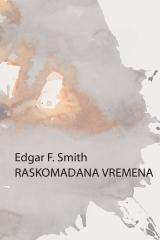
Raskomadana vremena

Raskomadana vremena

Edgar F. Smith, Rade Kovačević

Raskomadana vremena (2022) is the latest book by Rade Kovačević (1939–2024), a writer from Osijek, critic, essayist and long-time professor at the Faculty of Philosophy in Osijek, published under the pseudonym Edgar F. Smith.

Matica hrvatska, 2022.
Croatian. Latin alphabet. Paperback.
7.56 €
Why We Suck: A Feel Good Guide to Staying Fat, Loud, Lazy and Stupid

Why We Suck: A Feel Good Guide to Staying Fat, Loud, Lazy and Stupid

Denis Leary

A satirical, uncompromising and highly provocative book by Denis Leary, comedian and stand-up artist, written in the form of a long, cynical, swearing and aggressive monologue that reads like an extended stand-up performance on paper.

Penguin books, 2009.
English. Latin alphabet. Paperback.
6.365.09 €
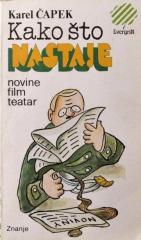
Kako što nastaje: novine, film, teatar

Kako što nastaje: novine, film, teatar

Karel Čapek

In a witty and instructive essay, Čapek describes how a newspaper, a film, and a theater play are created. Through humor and irony, he shows the complexity of the process – from idea to realization – and the different perspectives of the participants, dem

Znanje, 1985.
Croatian. Latin alphabet. Paperback.
4.76 €