Granica
Rare book

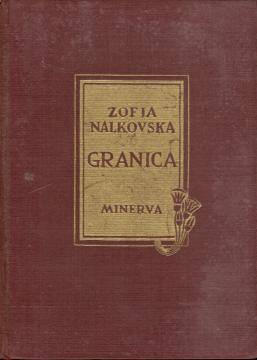
Granica

Zofia Nałkowska

Through the fate of the ambitious Zenon Ziembiewicz, the novel Granica depicts the transgression of moral, social and human boundaries – careerism, class differences and the price of compromise in interwar Polish society.

The Border (1935) is one of Zofia Nałkowska’s most significant works and the pinnacle of Polish psychological and social prose of the interwar period. The novel has a complex structure – it begins with the death of the main character Zenon Ziembiewicz, and then his life is reconstructed through retrospection.

Zenon Ziembiewicz, the son of an estate manager, is an ambitious and capable young man who quickly climbs the social ladder – from journalist to mayor. On the way to success, he crosses several “borders”: moral (betrays love and responsibility), class (exploits lower social classes) and human (loses inner purity). The story centers on two female characters: Elżbieta Biecka, a refined and cold member of the upper class, and Justyna Bogutówna, a poor, naive and emotional girl from the people whom Zenon seduces and abandons.

Nałkowska masterfully analyzes the mechanisms of careerism, the hypocrisy of bourgeois society, class divisions and moral relativity. The novel shows how an individual, in his pursuit of success and power, gradually loses the boundaries between good and evil, truth and lies, love and benefit. The criticism of patriarchal society and the fate of women in it is particularly strong.

The style is precise, psychologically deep and analytical, with elements of social satire. Nałkowska does not judge the characters directly, but rather depicts them in all their contradictions, leaving the reader to reflect on the limits of human action.

The Border is considered a classic of 20th-century Polish literature and an important testimony to the moral crisis of European civil society on the eve of World War II.

Translation
Duša Perović
Editor
Tanasije Mladenović, Risto Tošović
Illustrations
Nada Doroški
Graphics design
Stevan Vujkov
Dimensions
20 x 14 cm
Pages
306
Publisher
Minerva, Subotica, 1956.
 
Latin alphabet. Hardcover.
Language: Serbian.

One copy is available

Condition:Used, very good condition
Damages or inconvenience notice:
  • Traces of patina
 

Are you interested in another book? You can search the offer using our search engine or browse books by category.

You may also be interested in these titles

Potop

Potop

Henryk Sienkiewicz

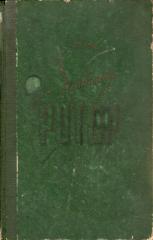
The Deluge, one of the most significant works of Polish and world historical literature, epically depicts the dramatic period of the Swedish Deluge in the Polish-Lithuanian Commonwealth in 1655–1660.

Hrvatsko književno društvo Sv. Jeronima, 1941.
Croatian. Latin alphabet. Hardcover.
8.42 €
Sablasti u Breslauu

Sablasti u Breslauu

Marek Krajewski

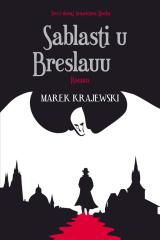
Ghosts of Breslau is the third installment in the celebrated series about Inspector Eberhard Mock, thanks to which Polish writer and classical philologist Marek Krajewski has been recognized worldwide as one of the canonical, full-blooded writers of histo

Fraktura, 2010.
Croatian. Latin alphabet. Paperback.
12.58 €
Devet

Devet

Andrzej Stasiuk

“Nine” (1999) by Andrzej Stasiuk, one of the most important contemporary Polish writers, is an unusual thriller that follows a small shopkeeper, Paweł, a modern-day Ulysses, whose life changes abruptly when debt collectors rob him and destroy his apartmen

Fraktura, 2003.
Croatian. Latin alphabet. Paperback.
5.74 €
Nečista posla

Nečista posla

Marek Hlasko
Grafički zavod - Titograd, 1965.
Serbian. Latin alphabet. Paperback.
4.98 €
Gdje je David Weiser

Gdje je David Weiser

Pawel Huelle

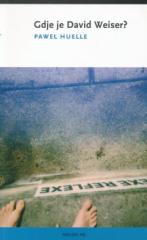
"Where's David Weiser?" is a novel by Pawel Huelle that, after a three-year 'bunker' in Poland, was published in 1987 and was quickly declared the "novel of the decade" by local critics, as well as a national classic.

Naklada MD, 2005.
Croatian. Latin alphabet. Paperback.
8.46 €