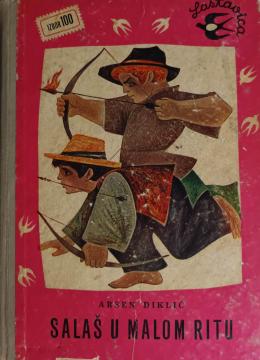
Salaš u Malom Ritu
*Salaš u Malom Ritu* tells the story of a boy named Milan Maljević and his coming of age in a village in the Banat region during the German occupation of 1941. The war cuts his childhood short and thrusts the boys into the dangerous world of adults.
Salaš u Malom Ritu (The Farmstead in Mali Rit) by Arsen Diklić is a children's war novel, first published in 1953. The story is set in the autumn of 1941, during World War II and the German occupation, in the fictional Banat village of Mali Rit. The protagonist is a boy named Milan Maljević; through his experiences, the novel portrays the war, fear, and the process of growing up too soon.
The inhabitants of Mali Rit appear to carry on with their daily rural lives, yet the war gradually alters their relationships and destinies. The village collaborates with the Partisans, meaning that any act of carelessness could lead to serious consequences. A particular threat is posed by Šicer, a police inspector attempting to uncover the villagers' ties to the Partisans. In this context, the children are no longer mere observers. Their games and boyhood adventures gradually evolve into genuine resistance against the occupiers, forcing them to confront the dangers of the adult world.
One of the novel's central themes is the experience of growing up prematurely amidst wartime conditions. Milan and his friends grapple with fear, violence, responsibility, and the need to protect others. Despite the wartime atmosphere, the work strongly emphasizes friendship, solidarity, courage, and the innate childhood need for play. Diklić depicts the war from a child's perspective, illustrating how historical events intrude upon their daily lives and compel them to mature before their time.
One copy is available