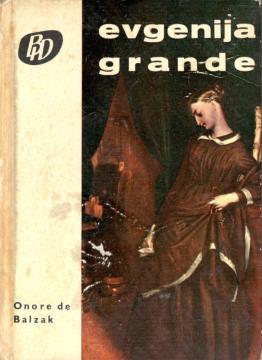
Evgenija Grande / Muzej starina

Evgenija Grande / Muzej starina

Honore de Balzac

In his novels Eugenie Grandet (1833) and The Museum of Antiquities (1837), Balzac explores universal themes of greed, human passions, sacrifice, and moral dilemmas, placing them in different social contexts of 19th-century French society.

  • Eugène Grande: A novel from The Human Comedy (1833) is set in Saumur, where the miserly Félix Grande, a wealthy merchant, controls his family – his wife and daughter Eugène. His obsession with money stifles all joy. Eugène, young and innocent, falls in love with her cousin Charles, a spoiled Parisian who arrives after her father's bankruptcy and suicide. She gives him her gold so that he can start a new life in India, waiting for him faithfully. Félix dies, leaving Eugène a fortune, but Charles betrays her, choosing a marriage of convenience. Heartbroken, Eugène marries Judge Cruchot, who soon dies. As a wealthy widow, she lives a solitary life, dedicated to charity. Balzac explores greed, sacrifice, and the tragic power of unrequited love.

  • "The Museum of Antiquities" (1837), part of Balzac's Human Comedy, is set in the provincial town of Alençon and Paris, where the fates of the aristocracy and the bourgeoisie intertwine. The story follows the young Victurnien d'Esgrignon, a nobleman from an old family, whose extravagance and gambling debts threaten the family's honor. His aunt, Armande, and father try to save him, but Victurnien falls into a web of manipulation by Chesnel, a loyal servant, and Du Croisier, a cunning bourgeois who wants to destroy d'Esgrignone. The plot is complicated when Victurnien steals money, and his love affair with a Parisian noblewoman further drags him into ruin. Balzac explores the conflict between the decadent aristocracy and the ambitious bourgeoisie, depicting moral corruption, social intrigue, and the decline of the old order. The novel is a satire of society and a character study, emphasizing the powerlessness of tradition in the face of the new capitalist world.

Titel des Originals
Eugenie Grandet / Le cabinet des antiques
Übersetzung
Dušan Đokić, Ilija Kecmanović
Editor
Milica Grabovac
Maße
16,5 x 12 cm
Seitenzahl
352
Verlag
Svjetlost, Sarajevo, 1963.
 
Latein Schrift. Hardcover.
Sprache: Kroatisch.

Es werden zwei Exemplare angeboten

Kopiennummer 1

Zustand:Gebraucht, in ausgezeichnetem Zustand
Nachteile/Unannehmlichkeiten:
  • Spuren von Patina
Zum Warenkorb hinzugefügt!

Kopiennummer 2

Zustand:Gebraucht, in ausgezeichnetem Zustand
Zum Warenkorb hinzugefügt!
 

Interessieren Sie sich für ein anderes Buch? Sie können das Angebot über unsere Suchmaschine suchen und finden oder Bücher nach Kategorien durchsuchen.

Diese Titel könnten Sie auch interessieren

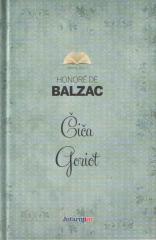
Čiča Goriot

Čiča Goriot

Honore de Balzac

Onkel Goriot ist die Geschichte des alten Kriegsgewinnlers Goriot und seiner Töchter, die ihn, nachdem sie ihn bis auf die Haut ausgeraubt haben, in der Einsamkeit und dem Elend der Vaquer-Pension sterben lassen, eine Geschichte, die heute auf mehreren Eb

Europapress holding, 2008.
Kroatisch. Latein Schrift. Hardcover.
6,32 - 6,99 €
Sjaj i bijeda kurtizana

Sjaj i bijeda kurtizana

Honore de Balzac

Glanz und Elend einer Kurtisane ist Teil von Balzacs Sammlung Die menschliche Komödie. Der Roman verfolgt das Schicksal des ehrgeizigen jungen Dichters Lucien de Rubempré und seine Beziehung zum mysteriösen Ex-Sträfling Vautrin in der Welt der Pariser Dek

Globus, 2004.
Kroatisch. Latein Schrift. Hardcover.
4,76 - 4,82 €
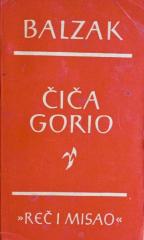
Čiča Gorio

Čiča Gorio

Honore de Balzac

Onkel Goriot ist die Geschichte des alten Kriegsgewinnlers Goriot und seiner Töchter, die ihn, nachdem sie ihn bis auf die Haut ausgeraubt haben, in der Einsamkeit und dem Elend der Vaquer-Pension sterben lassen, eine Geschichte, die heute auf mehreren Eb

Rad, 1961.
Serbisch. Latein Schrift. Taschenbuch.
1,99 €
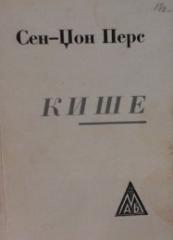
Kiše

Kiše

Saint-John Perse
Bagdala, 1962.
Serbisch. Kyrillisch Schrift. Taschenbuch.
4,28 €
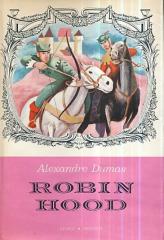
Robin Hood

Robin Hood

Alexandre Dumas

Dumas porträtiert Robin Hood nicht nur als Banditen, der den Armen hilft, sondern auch als heldenhaften Kämpfer für Gerechtigkeit und Symbol des Widerstands gegen feudale Ungerechtigkeit.

Epoha, 1966.
Kroatisch. Latein Schrift. Fester Einband mit Schutzumschlag.
4,26 - 4,82 €